





Single Tires vs. Double Tires: Key Differences and Why Many Armies Prefer Singles
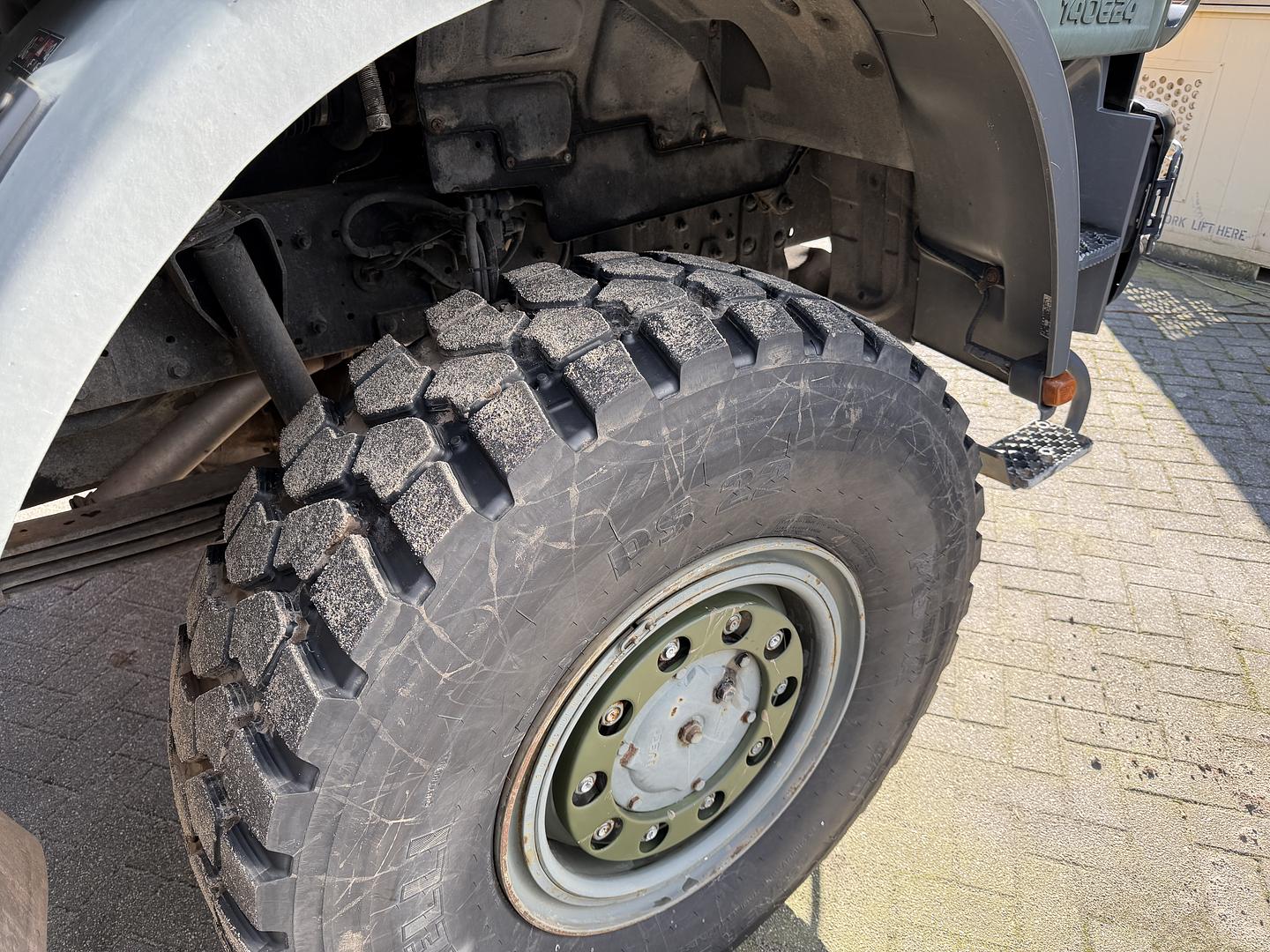
Choosing between single tires (one tire per wheel position) and double tires (dual tires mounted side-by-side on the same axle position) is more than a maintenance decision—it directly affects vehicle mobility, payload capability, reliability, and operating cost. In commercial trucking, dual tires are common for heavy loads and highway stability. In contrast, many armed forces increasingly favor single “super single” tires on tactical vehicles for performance across varied terrain.
This article explains the practical differences between single and double tires, the advantages and disadvantages of each, and why military vehicle programs often specify singles for tactical fleets.
What Are Single Tires and Double Tires?
Single tires use one wide tire at each wheel end. On multi-axle vehicles, that means one tire per wheel position across front and rear axles. Modern military singles are often wide, high-flotation tires designed for low ground pressure and may be paired with Central Tire Inflation Systems (CTIS) and run-flat inserts.
Double tires (also called duals) place two tires side-by-side on each wheel end, typically on rear axles. Duals can increase load capacity and provide some redundancy if one tire fails, but they also introduce spacing issues and traction limitations in soft ground.
The Real-World Differences That Matter
1) Ground Pressure and Off-Road Mobility
In soft terrain—mud, sand, snow, marsh, or loose soil—mobility depends heavily on ground pressure and tread contact. A wide single tire can create a broader footprint, particularly when pressure is lowered via CTIS. That reduces sinkage and improves traction.
Dual tires can perform well on firm surfaces, but in soft conditions they often cut ruts and sink. The gap between duals may also “plow” material, increasing rolling resistance and reducing forward progress. For armies that must operate off paved roads and across unimproved ground, this is a decisive factor.
2) Vehicle Width and Maneuverability
Dual tires make vehicles wider. On narrow roads, forest tracks, urban alleys, and bridge approaches, that width can limit route options and complicate convoy movement. Wide singles can offer similar load capability with a narrower overall axle width than duals—helpful for tactical maneuvering and transport.
3) Debris and Rock Trapping
A common operational issue with dual tires is debris trapping. Rocks, sticks, or scrap can become wedged between the two tires. This can lead to sidewall damage, uneven wear, heat buildup, or sudden failures. Single tires eliminate the inter-tire gap entirely, reducing this specific failure mode—an important benefit when vehicles operate far from maintenance support.
4) Maintenance and Logistics Footprint
In expeditionary environments, reducing complexity is a major advantage. Single-tire configurations can simplify:
- Inspection: fewer tires to check for damage and pressure issues.
- Replacement: fewer wheel ends to service, faster tire changes.
- Spare parts: fewer total tires required across a fleet for the same number of vehicles.
However, there is a trade-off: because each tire carries more of the load than a dual setup, tire selection and inflation discipline become more critical.
Advantages of Single Tires (Why Armies Often Choose Them)
Superior Mobility on Soft Terrain
Many military operations require cross-country movement where roads are limited or damaged. Wide single tires, especially when combined with CTIS, can be deflated for a larger footprint and reinflated for hard surfaces. This flexibility supports better traction and reduced bogging.
Reduced Risk of “Dual Gap” Damage
Eliminating the space between tires reduces the chance of rocks or debris causing punctures and sidewall abrasion—common issues on rough terrain and rubble-strewn routes.
Lower Vehicle Width and Better Route Access
Single tires can keep vehicles within tighter width constraints. That improves maneuverability, reduces the likelihood of curb strikes or roadside hazards, and can broaden the set of routes and bridges a vehicle can safely use.
Potential Weight Savings
Dual configurations require extra tires, wheels, and hardware, adding unsprung weight. In some cases, singles can reduce weight or reallocate it to armor, payload, fuel, or mission equipment. Lower unsprung weight can also improve ride and handling on uneven surfaces.
Operational Efficiency in the Field
Fewer tires means fewer failure points to monitor. For many tactical truck fleets, this translates into faster pre-mission checks and simpler sustainment—both valuable when tempo is high and maintenance capacity is limited.
Disadvantages of Single Tires (What Armies Must Mitigate)
Less Redundancy at Each Wheel End
With dual tires, a single puncture may still allow limited movement at reduced speed. With singles, a serious failure at one wheel end can stop the vehicle unless it has run-flat capability, robust mobility doctrine, or recovery assets nearby. Many modern military vehicles address this through run-flat inserts, beadlock wheels, and strict tire management procedures.
Higher Load Per Tire
Each tire in a single setup carries more load than in a dual configuration. That can increase heat buildup and wear if tire specification, inflation, or speed management is not correct. This is one reason military tire procurement emphasizes heavy-duty construction, high load ratings, and compatibility with CTIS.
Potentially Higher Individual Tire Cost
Wide singles are often more expensive per tire than standard dual tires. While total tire count is lower, procurement and lifecycle cost can vary depending on usage patterns, local sourcing, and replacement rates.
Advantages of Double Tires (Why Duals Still Exist)
High Load Capacity and Highway Stability
Dual tires distribute weight across two contact patches at each wheel end, historically providing strong load capacity for heavy payloads on paved roads. They are widely used in commercial logistics for predictable routes and consistent surfaces.
Some Level of “Limp Home” Capability
If one of the dual tires fails, the second tire may support limited movement to a safer location or a maintenance point (though this is not always safe or recommended at speed). In controlled environments, that redundancy can be valuable.
Disadvantages of Double Tires (Challenges in Tactical Use)
For military operations, dual tires often present recurring drawbacks:
- Reduced off-road performance in mud and sand due to rutting and higher rolling resistance.
- Debris trapping between the tires leading to damage and downtime.
- Increased width that can restrict movement in tight terrain and urban areas.
- More maintenance overhead due to additional tires and more complex checks.
So Why Do Most Armies Prefer Single Tires?
The short answer is that many armies optimize for mobility, simplicity, and survivability in unpredictable terrain. Tactical vehicles must perform in off-road conditions, traverse debris, operate on damaged infrastructure, and keep moving with minimal maintenance support. Single tires—especially modern wide singles—support these goals by improving flotation, reducing snag points and debris issues, and simplifying fleet logistics.
That said, tire choice is not universal. Some heavy transport and specialized platforms may still use duals where payload and paved-road performance dominate the requirement. But for many tactical trucks and armored support vehicles, single tires align better with the realities of field operations.
Bottom Line: Choosing the Right Configuration
Single tires generally offer better off-road mobility, reduced width, fewer debris-related failures, and simpler sustainment—key reasons many armies select them for tactical fleets. Double tires can offer load distribution and some redundancy, but they often struggle in soft terrain and add maintenance and width penalties.
For organizations evaluating vehicle specifications—whether military, emergency response, or industrial off-road fleets—the best choice depends on mission profile. If operations involve frequent unimproved terrain, constrained routes, and limited maintenance access, single tires are often the most practical and resilient solution.